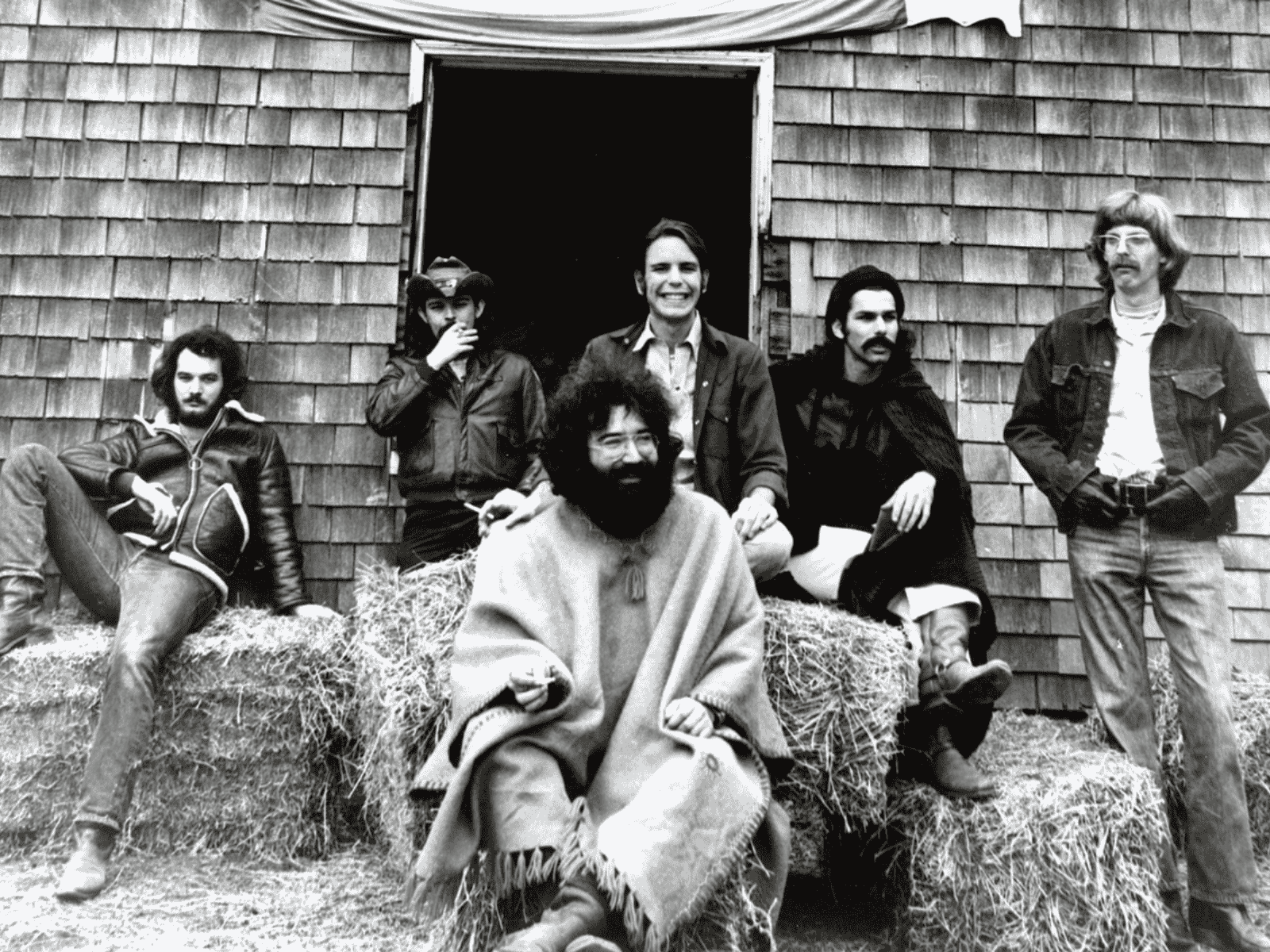
24 Oct What the Grateful Dead Can Teach Us About Timeless Branding
What the Grateful Dead Can Teach Us About Building a Brand That Lasts Forever
When it comes to marketing, the Grateful Dead broke just about every rule in the book.
They gave their product away and gave fans the nod of approval to bootleg their shows. They played for free in parks. In addition, they never really chased radio hits or chart success as studio albums were simply the framework for the live show.
And yet – more than 60 years later – the Grateful Dead remains one of the most powerful and profitable brands in music.
So how did a group of psychedelic misfits build a business empire that still thrives decades after their last official concert? Let’s dig into what the Dead can teach all of us about brand building, community, and keeping your marketing in motion.
Give It Away to Grow It
In the 1970s, the Dead did something unheard of in the music world: they let fans record and share their shows. The band even created a designated “taper’s section” at concerts so diehard fans could plug in and capture the performance.
At the time, this flew in the face of conventional music marketing, which relied on controlling distribution and protecting copyright. But the Dead saw something others didn’t – the power of community circulation. Those bootleg tapes became living advertisements, introducing new fans to the experience and spreading the music faster than any record label could.
Lesson: Sometimes the best way to grow is to let go. When you empower your audience to share your work, you turn customers into advocates in a short time.
Experience Over Perfection
The Dead were never known for flawless studio albums. But their true art was live improvisation — a different show, every night, no repeat sets. Fans didn’t just listen; they followed, driving thousands of miles to be part of the next experience. And for many fans, the experience of getting to the show was one within itself as Jerry Garcia has noted on occasion.
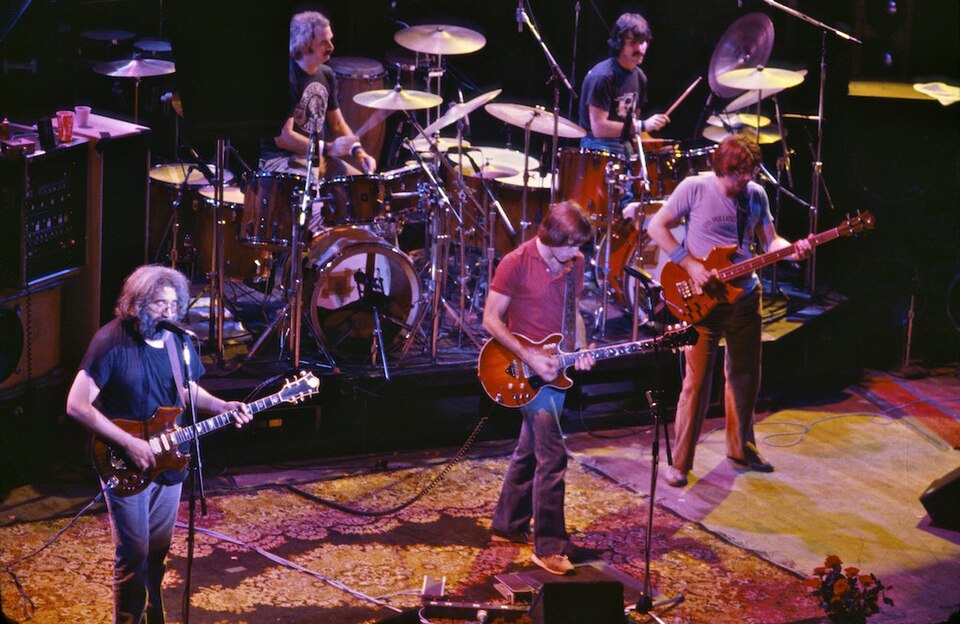
That kind of unpredictability created anticipation and emotional connection. You didn’t just attend a Grateful Dead concert — you joined a moment in time.
In the same manner, their music is not for the casual listener. For many, it’s an attraction that comes to you at different points in life.
Lesson: Your brand’s greatest value may not live in the product itself, but in the experience it creates.
Iconography That Outlived the Music
From the Steal Your Face (Stealie) skull and lightning bolt to the dancing bears, roses, and terrapins, the Grateful Dead created one of the most enduring visual languages in popular culture. Their imagery wasn’t the product of a marketing department – it was the work of visionary artists like Stanley Mouse and Alton Kelley, who blended psychedelic art, Americana, and folk symbolism into something entirely new.
Mouse’s work became the visual soul of the band. His posters and album covers – most famously Skull & Roses (1971) and American Beauty (1970) – fused 19th-century engravings, bright color palettes, and surreal lettering that felt both nostalgic and otherworldly. These designs did more than advertise concerts; they built myth and lore. The skull became a totem, the lightning bolt a spark of identity, and the roses a reminder of life and renewal.
The Dead understood the power of this imagery. It wasn’t just decoration – it was invitation. Fans could recognize one another across a parking lot by a bolt on a shirt or a bear on a bumper sticker. Over time, these visuals became symbols of belonging, spreading the brand far beyond the music itself.
Even today, Stanley Mouse’s art continues to define the Dead’s visual heritage — appearing on everything from limited-edition prints to collaborations with brands like Vans, Nike, and Levi’s. His influence shows how art and identity, when deeply aligned, can make a brand immortal.
Lesson: Great branding is visual storytelling. When your symbols carry meaning — and your art reflects your soul — your audience carries them with pride.
Build a Tribe, Not a Target Market
The Dead didn’t just have fans — they built a tribe. “Deadheads” weren’t passive consumers; they were participants in a living, breathing culture. They traded tapes, shared rides, and built their own economy around the band.
This deep sense of community created loyalty that money couldn’t buy. It also meant the brand evolved naturally — fans kept it alive long after the band stopped touring.
Lesson: The most powerful brands invite participation. When people feel ownership, they stay forever.
Authenticity Is the Real Currency
There was nothing slick about the Grateful Dead. No scripted interviews. No PR-perfect personas. Just a group of musicians doing what they loved — openly, honestly, and without compromise.
That authenticity resonated. Fans felt it. And it became the foundation of a brand that still feels “real” decades later.
Lesson: Authenticity doesn’t just attract customers — it anchors a brand for generations.
Merchandising the Myth
If the Grateful Dead’s visual language was the spirit, merchandising was the muscle. They turned iconography into economics — and the results were impressive.
- In the mid-1980s, one of their licensees (Liquid Blue) was selling about $4 million worth of Dead-branded merchandise annually to retail outlets.
- By the late 1990s and early 2000s, Grateful Dead Productions was generating nearly $15 million annually from merchandise sales.
- Touring remains a cornerstone: in the 1990s alone, the Dead grossed $285 million from live concert revenue.
- Fast forward to the modern-day incarnation: the Dead & Company 2023 tour pulled in $115 million from 29 shows.
- Their “Dead Forever” residency at the Las Vegas Sphere grossed $131.4 million, selling nearly 477,000 tickets.
These figures show that the merchandising arm was never a footnote — it’s been a primary revenue engine. Over time, licensing deals, brand partnerships, and merchandise innovations have allowed the Grateful Dead to monetize their cultural identity at scale. Fans didn’t just consume music — they wore it, lived it, turned it into fashion and art.
Lesson: When your symbols have meaning and your brand becomes culture, merchandising isn’t just a side hustle — it becomes a core business. The Dead proved that a band’s legacy can be more financially enduring than any chart-topping hit.
Longevity Through Legacy
Most bands fade when the spotlight dims. The Dead’s light keeps burning through Dead & Company, countless tribute bands, and millions of loyal fans across generations.
That’s because their brand was never built on celebrity or hits — it was built on values: freedom, creativity, and connection.
Lesson: When you build around timeless principles, your brand becomes bigger than you.
Final Thoughts: How The Dead Marketed with Soul
The Grateful Dead didn’t follow a strategy. They lived one. They built a community before it was called a “fan base.” They gave before they asked. They shared before they sold.
And through it all, they proved something powerful: You don’t need to be perfect to build something that lasts. You just need to be real.
That’s marketing in motion — messy, human, and full of soul.